How To Tell If Your Drivetrain Components Are Worn
Introduction
In this post, I will explain how to tell if your drivetrain components are worn. It is my hope that this article will help you to more confidently understand and identify the maintenance work required on your bicycle during servicing. For the purposes of this post I will be focusing purely on bikes with teeth-driven systems and external gears, this is because belt-drives and hub-gears require slightly different forms of attention.
What Is A Drivetrain?
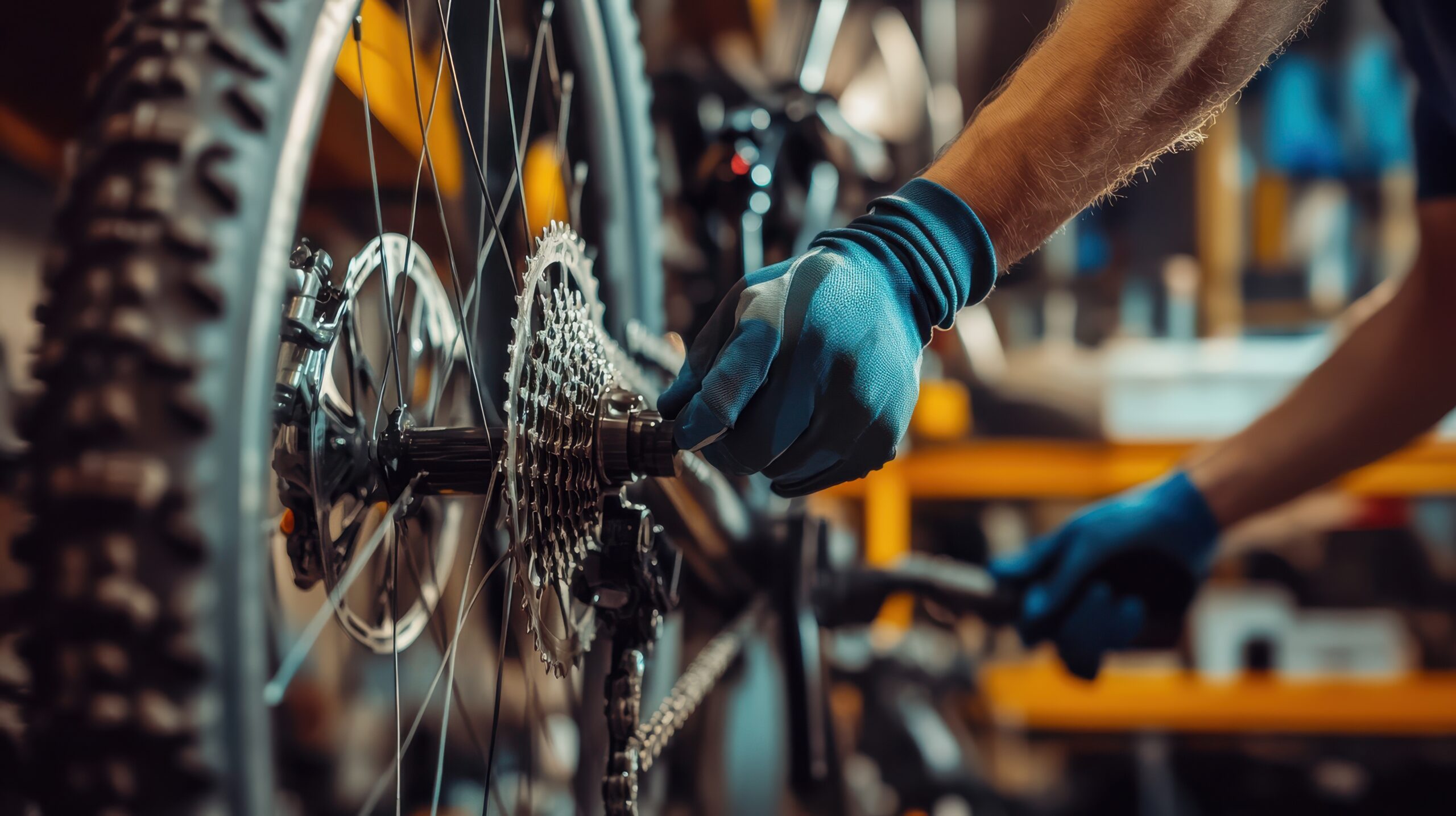
The Drivetrain is the collective term which refers to the cogs at the front and the rear of your bike, and the chain that links them together. The cogs on the front – where the pedals are – are called chainrings and these chainrings attach to your cranks, which attach to your pedals. The cogs towards the rear of the bike – in the centre of the rear wheel – are called a Cassette or on some older or more basic bicycle models these are called a Freewheel. A Cassette and Freewheel have a different fitment but in essence, they serve the same function. Generally speaking, all the cogs together compose the gearing of the bike and they are the system which transfers the kinetic energy from your body into the wheels, enabling your locomotion by bicycle.
What Causes Wear In A Drivtrain?
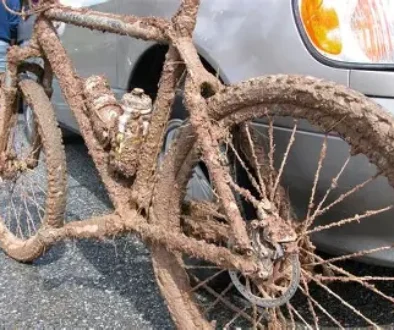
The drivetrain on your bike is subject to high amounts of wear. This is due in part to the forces put into it by your legs which inherently introduces stress to the system and therefore even perfectly maintained drivetrains will wear with time and movement. An analogy you may consider is that of waves on a beach, causing constant change via the transfer of energy that is more noticeable when observed over a duration rather than at a momentary glance. Sadly for your drivetrain; roads, trails and paths etc. are full of materials, such as grit, which find its way into all the nooks and crannies of the chain adding more abrasives into the system, exacerbating the forces already present. Over time, this causes the chain to effectively stretch in miniscule increments, by wearing away at the rollers between the teeth, which in turn begins to affect the precision machining of the teeth in the system on the chainrings and cassette/freewheel.
How Can I Tell If My Drivetrain Is Worn?
A useful point of departure when checking for wear in the drivetrain is to check the chain for wear. The best way to do this is with a chain wear checking tool. If you do not have one of these, feel free to pop by the shop at any time and ask to borrow ours. It’s best to check your chain intermittently every couple of months, or much more often if you ride a lot of miles. A chain should last around 1500-3000miles, but keep in mind that high-performance 9, 10, 11 and 12 speed cassettes use incrementally narrower chains which wear quicker and have lower tolerances to the introduction of wear. By catching chain wear early, we can prolong the life of the teeth in chainrings and cassettes. The risks of not replacing a worn chain include poor shifting, increased wear to the rest of the components in the drivetrain and a snapped chain and therefore potentially an injury. Usually, the time to replace and chain is when the wear measured is between 0.5mm and 0.75mm wear. Once the wear has exceeded this, it is more often the case that the chain will skip significantly on the teeth of the cassette and therefore this part will need to be replaced in tandem with the chain. This is because the stretch in the chain causes the teeth to change shape. At Leith Cycle Co. we always check a new chain on the old cassette by test-riding the bike, with the hope that the chain doesn’t skip and only repairing what is necessary to help with any budgeting concerns for your services and repairs.
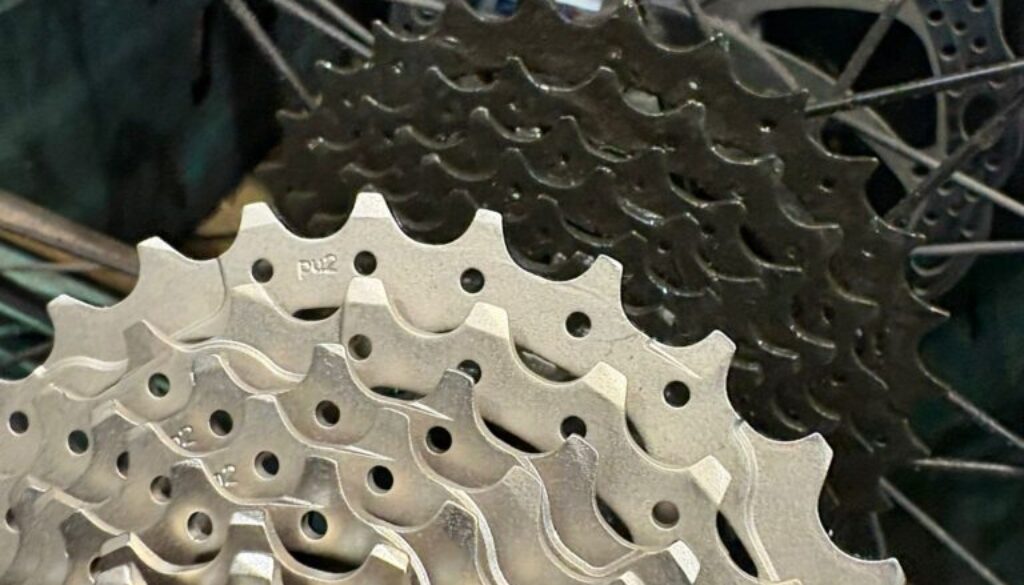
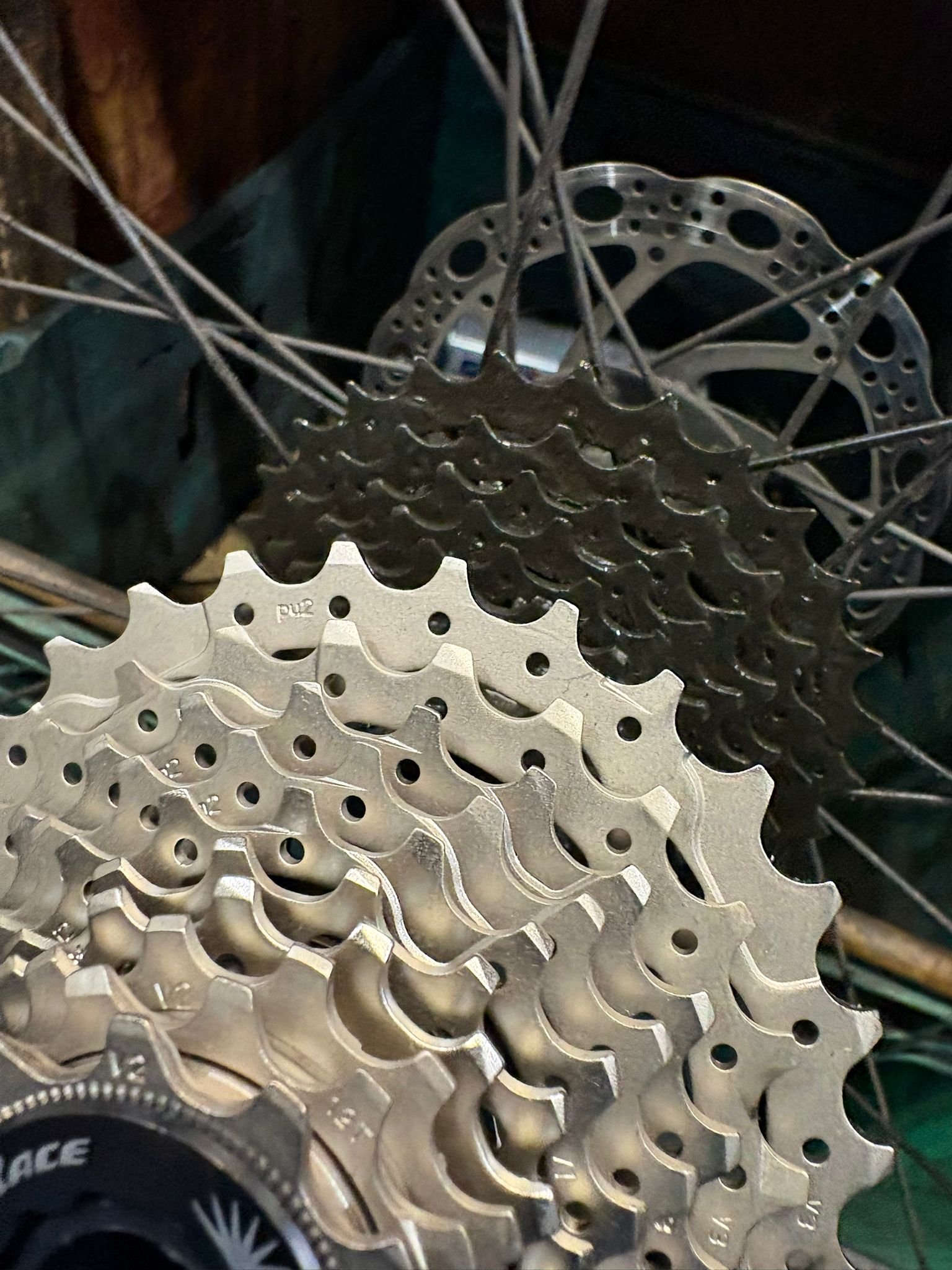
This leads me to checking your chainrings and cassette for wear. This can usually be done by visual inspection as per the images below. What you are looking for is teeth that have been worn to a point and look a bit like sharks teeth. If your teeth are pointed, it is highly likely that replacement parts are needed.

What Can I Do?
Firstly, the best preventative maintenance is to clean your chain regularly with a bike specific degreaser and to subsequently apply chain lubricant oil to keep things moving smoothly. Second, is to replace the chain before it has become too worn. Lastly, as with many things in life, age and wear comes to us all. If you plan ahead, track your mileage and clean and lubricate your chain regularly, you will extend the life of the system as best as you can.